MIDP vs TIDP in BIM: Understanding Information Delivery Planning in ISO 19650
As Building Information Modeling (BIM) projects become larger and more collaborative, managing information effectively is just as important as creating accurate models. Teams often include architects, structural engineers, MEP engineers, contractors, consultants, and facility managers, all producing information at different stages of a project.
Without a structured approach, project information can become inconsistent, duplicated, or delayed. To solve this challenge, the ISO 19650 standard introduces Information Delivery Planning through two important documents: the Master Information Delivery Plan (MIDP) and the Task Information Delivery Plan (TIDP).
These plans ensure that every team knows what information must be produced, who is responsible, when it should be delivered, and in which format. Together, MIDP and TIDP improve collaboration and create a reliable information management process. :contentReference[oaicite:1]{index=1}
What is Information Delivery Planning?
Information Delivery Planning is the process of organizing project information before it is created. Instead of waiting until deadlines approach, BIM teams define deliverables, responsibilities, and schedules from the beginning of the project.
A well-structured Information Delivery Plan helps ensure that everyone is working toward the same objectives and reduces communication issues between disciplines.
What is MIDP?
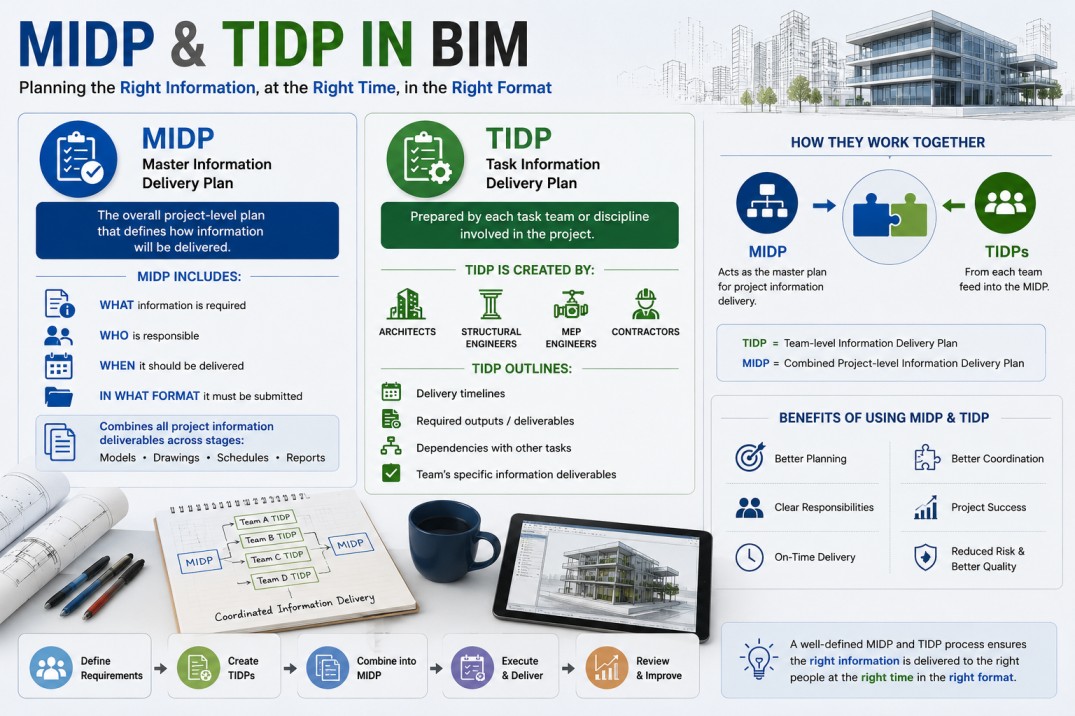
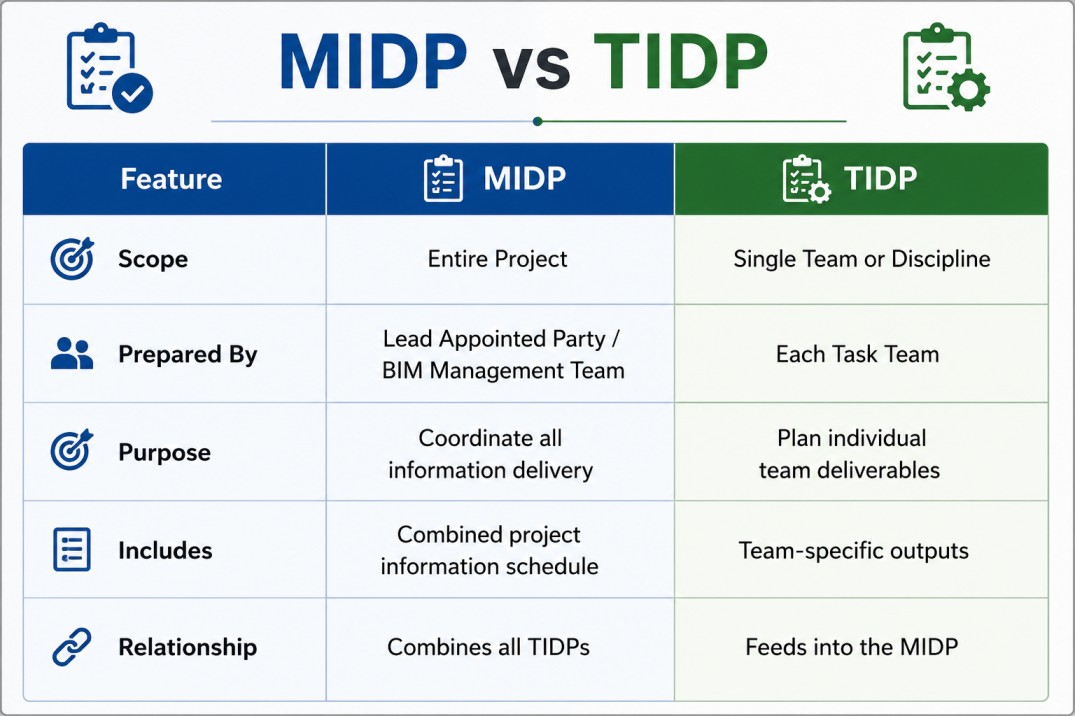
MIDP stands for Master Information Delivery Plan. It is the overall project-level plan that combines information from every discipline into one coordinated delivery schedule.
According to the infographic, the MIDP defines how information will be delivered throughout the project. It identifies:
- What information is required.
- Who is responsible for producing it.
- When each deliverable is due.
- The required delivery format.
The MIDP acts as the master roadmap for project information management and combines all team deliverables into a single coordinated plan. :contentReference[oaicite:2]{index=2}
What is TIDP?
TIDP stands for Task Information Delivery Plan. Unlike the MIDP, which covers the entire project, a TIDP is prepared by each task team or discipline.
Each discipline creates its own plan that describes how it will deliver its information.
Typical TIDP contents include:
- Delivery timelines.
- Required outputs and deliverables.
- Dependencies on other teams.
- Team-specific information deliverables.
Architects, structural engineers, MEP engineers, contractors, and other project participants typically prepare their own TIDPs before those plans are combined into the project MIDP. :contentReference[oaicite:3]{index=3}
How MIDP and TIDP Work Together
The relationship between MIDP and TIDP is straightforward.
- Each discipline prepares its own TIDP.
- The individual TIDPs are reviewed and coordinated.
- They are combined into a single MIDP.
- The MIDP becomes the project's overall information delivery plan.
This structured process helps ensure that every team delivers the correct information at the correct time while reducing coordination conflicts.
Benefits of Using MIDP and TIDP
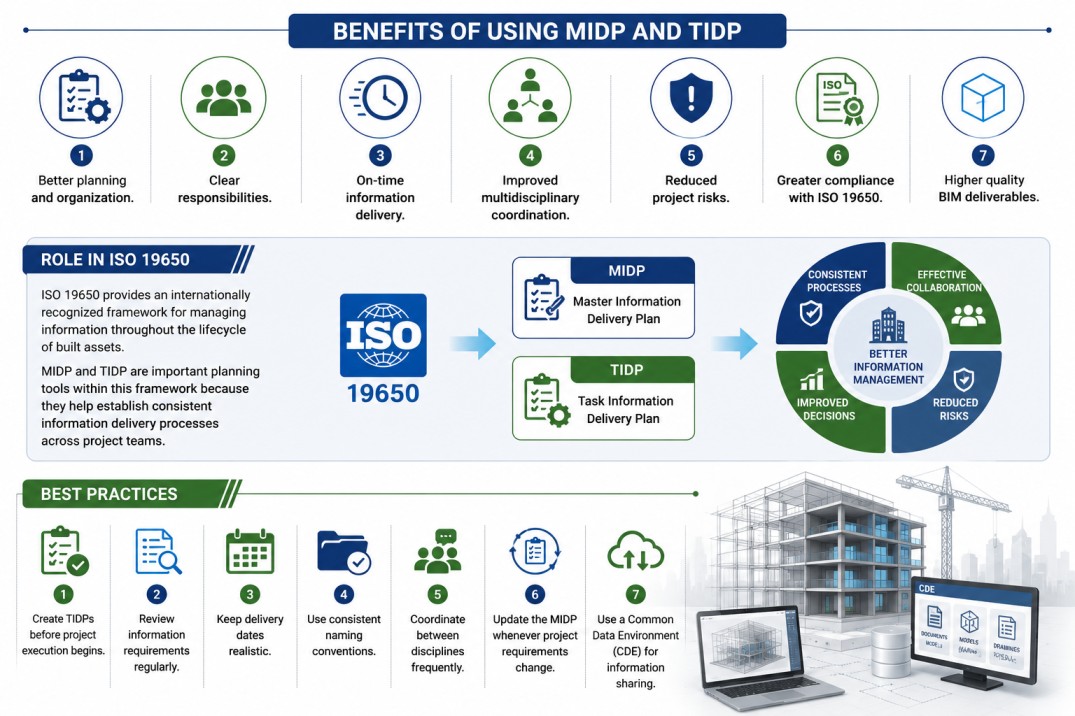
- Better planning and organization.
- Clear responsibilities.
- On-time information delivery.
- Improved multidisciplinary coordination.
- Reduced project risks.
- Greater compliance with ISO 19650.
- Higher quality BIM deliverables.
Role in ISO 19650
ISO 19650 provides an internationally recognized framework for managing information throughout the lifecycle of built assets. MIDP and TIDP are important planning tools within this framework because they help establish consistent information delivery processes across project teams.
Best Practices
- Create TIDPs before project execution begins.
- Review information requirements regularly.
- Keep delivery dates realistic.
- Use consistent naming conventions.
- Coordinate between disciplines frequently.
- Update the MIDP whenever project requirements change.
- Use a Common Data Environment (CDE) for information sharing.
Conclusion
MIDP and TIDP are essential tools for successful BIM information management. While the TIDP focuses on individual team deliverables, the MIDP brings all of those plans together into one coordinated project-wide information delivery strategy.
Understanding the relationship between these two plans helps BIM Managers, Coordinators, Architects, Engineers, and Contractors improve collaboration, deliver information on time, and align with ISO 19650 best practices. As BIM adoption continues to grow worldwide, mastering Information Delivery Planning is becoming an increasingly valuable skill for every BIM professional. :contentReference[oaicite:4]{index=4}