What is BIM? A Beginner’s Guide for Architects, Engineers & Designers
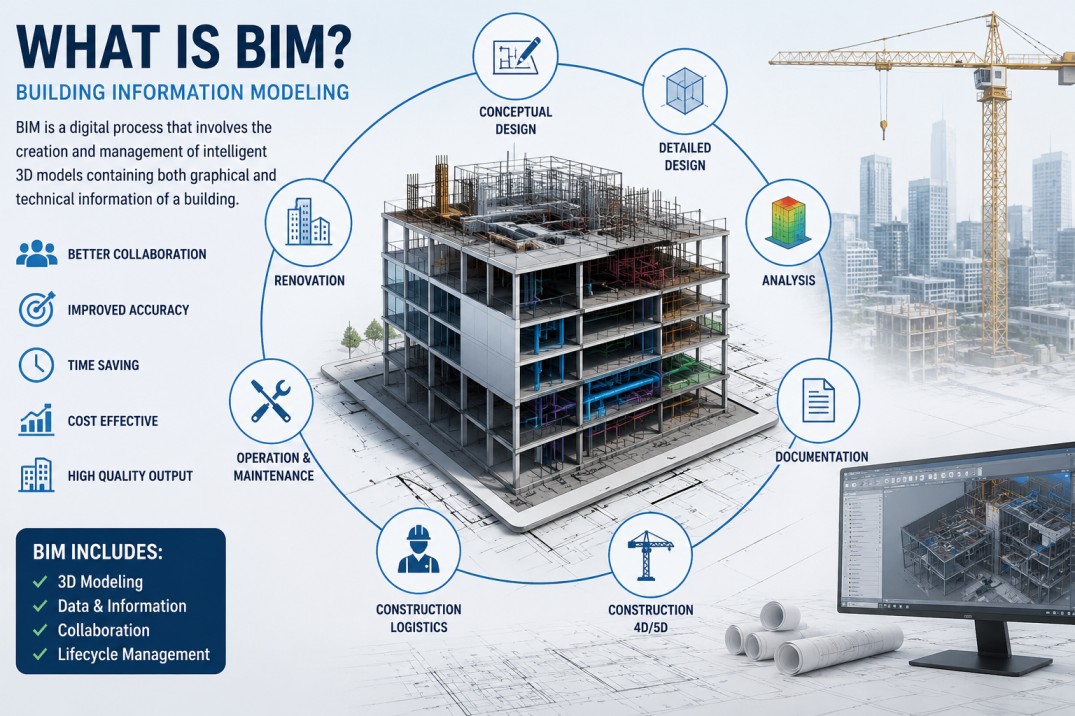
Building Information Modeling (BIM) is a modern digital process used in architecture, engineering, and construction projects. BIM helps professionals create intelligent 3D models that contain both graphical and technical information about a building.
Unlike traditional 2D CAD drawings, BIM models include detailed information such as dimensions, materials, quantities, schedules, and system data. This allows architects, engineers, and contractors to collaborate more efficiently throughout the entire construction process.
Today, BIM technology is widely used in residential, commercial, industrial, and infrastructure projects. Many construction companies and governments now require BIM workflows because they improve project quality and reduce construction costs.
BIM stands for Building Information Modeling. It is a workflow that enables multiple professionals to work together using a shared digital model of a building project.
One of the biggest advantages of BIM is improved project visualization. Designers and clients can view realistic 3D building models before construction begins, helping improve decision-making and reducing misunderstandings.
BIM improves project coordination and accuracy. Any change made inside the BIM model automatically updates across all drawings and views, reducing errors and saving time during construction projects.
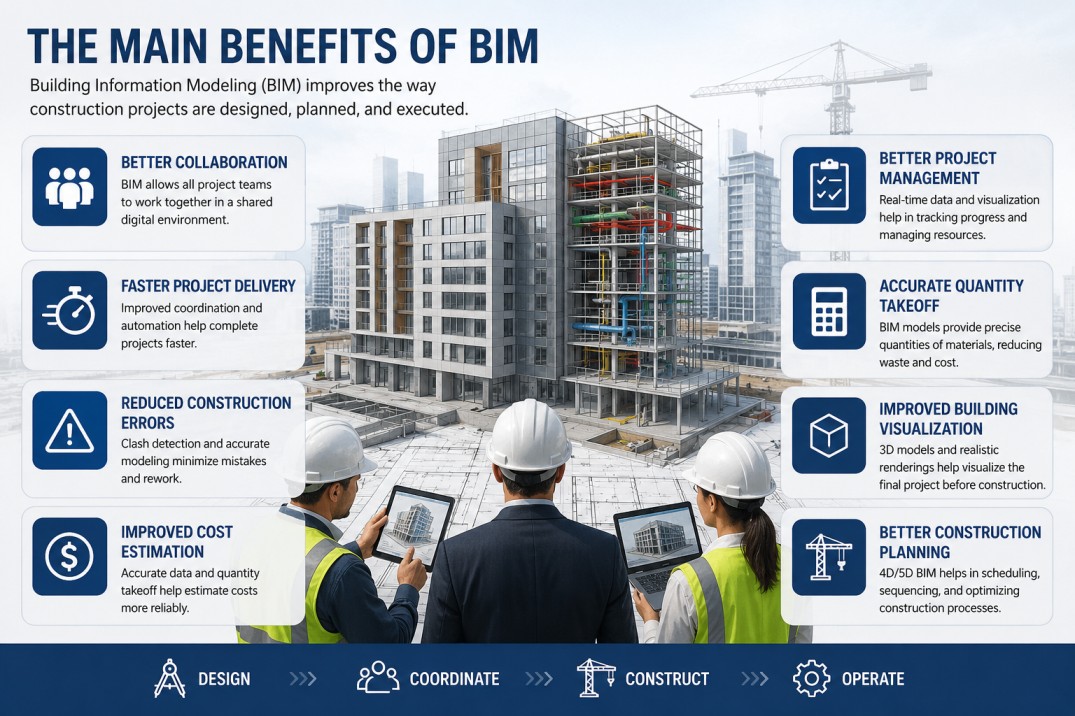
The main benefits of BIM include:
- Better collaboration between project team
- Faster project delivery
- Reduced construction errors
- Improved cost estimation
- Better project management - Accurate quantity takeoff - Improved building visualization - Better construction planning
Traditional CAD focuses mainly on 2D drafting, while BIM creates intelligent 3D models containing real project information. BIM also improves teamwork and reduces design conflicts before construction begins.
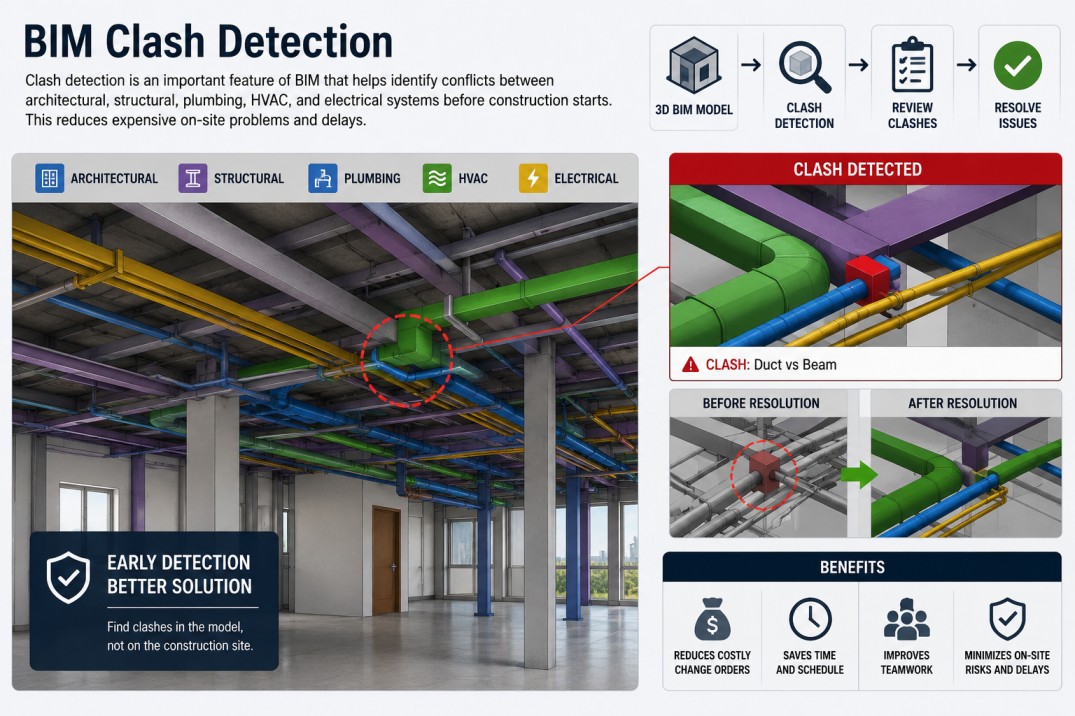
Another important feature of BIM is clash detection. BIM software helps identify conflicts between architectural, structural, plumbing, HVAC, and electrical systems before construction starts. This reduces expensive on-site problems and delays.
BIM objects are digital components used inside BIM software such as Autodesk Revit. These objects contain graphical, technical, and parametric information useful for real-world building projects.
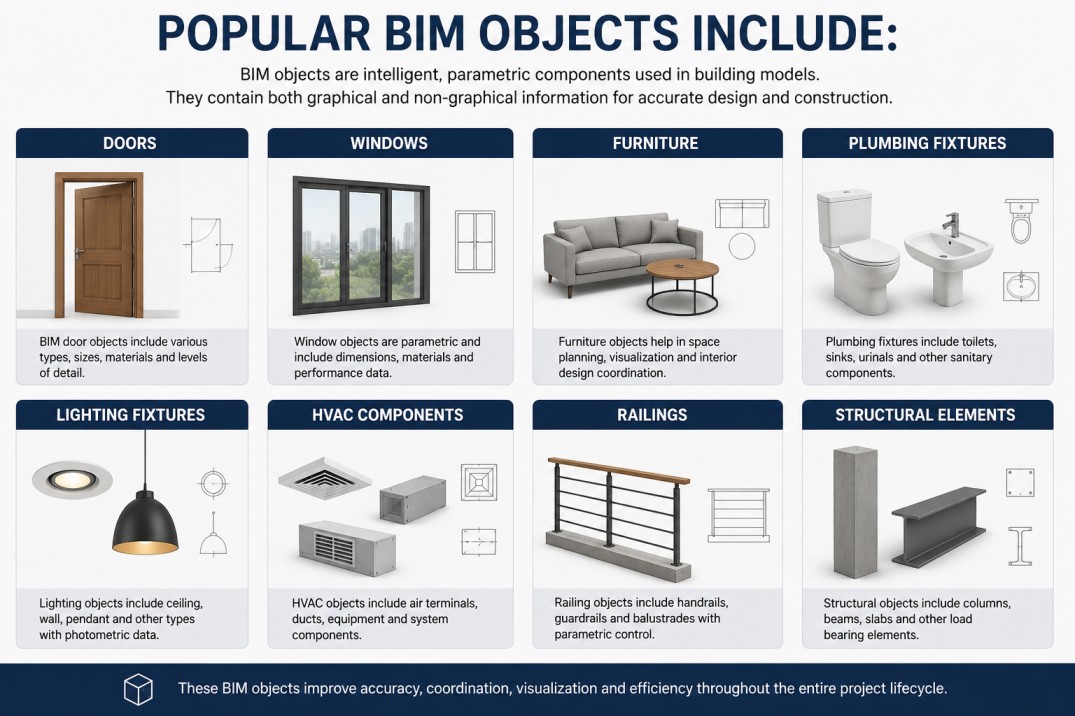
Popular BIM objects include:
- Doors
- Windows
- Furniture
- Plumbing fixtures
- Lighting fixtures
- HVAC components
- Railings
- Structural elements
Each BIM object contains technical and parametric information that helps architects and engineers work more efficiently and accurately.
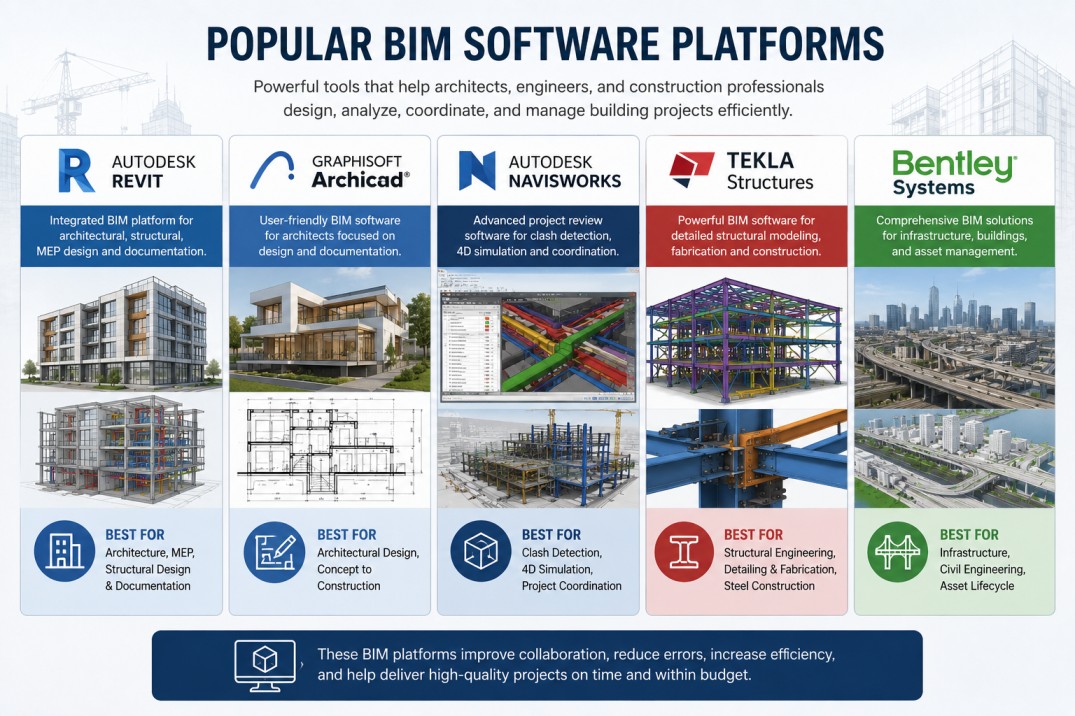
Some of the most widely used BIM software platforms include:
- Autodesk Revit
- ArchiCAD
- Navisworks
- Tekla Structures
- Bentley Systems
Among these, Autodesk Revit is one of the most popular BIM tools used by architects, engineers, and designers worldwide.
Architects use BIM for design visualization, planning, and documentation. Structural engineers use BIM for analysis and coordination, while MEP engineers use BIM for plumbing, electrical, and HVAC system design.
Contractors use BIM for project scheduling, quantity estimation, and construction management. BIM also helps facility managers maintain and manage buildings after project completion.
Modern BIM workflows also support cloud collaboration, allowing teams from different locations to work together using centralized digital models and real-time project updates.
The future of BIM technology continues to grow rapidly. Technologies such as artificial intelligence (AI), cloud collaboration, digital twins, virtual reality (VR), and augmented reality (AR) are making BIM even more powerful and efficient.
Digital twin technology allows professionals to create virtual representations of real buildings connected with live operational data. This helps improve facility management and building performance monitoring.
BIM is becoming the global standard in the construction industry. Governments and companies increasingly require BIM workflows for large commercial and infrastructure projects because of their ability to improve efficiency and reduce project risks.
As digital construction continues to evolve, BIM skills are becoming increasingly valuable for architects, engineers, designers, contractors, and construction professionals worldwide.
Building Information Modeling is transforming the architecture, engineering, and construction industry by improving collaboration, reducing errors, increasing efficiency, and supporting smarter building design workflows.