BIM Modeler Interview Guide: How to Prepare, Stand Out, and Secure Your Next BIM Opportunity
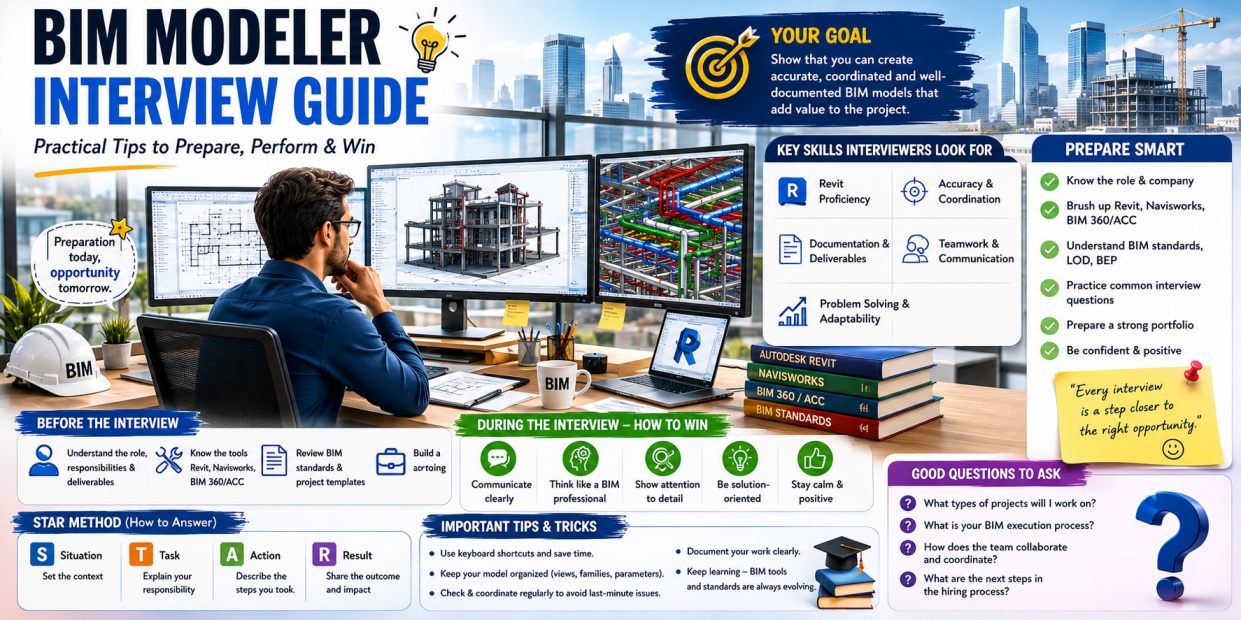
The Building Information Modeling (BIM) industry continues to experience rapid growth as architecture, engineering, and construction companies increasingly adopt digital workflows. As organizations invest more heavily in BIM technologies, the demand for skilled BIM Modelers continues to rise. While opportunities are expanding, competition for high-quality BIM positions is also increasing, making interview preparation more important than ever.
Many candidates assume that strong software skills alone are enough to secure a BIM role. Although technical expertise is essential, employers are looking for professionals who can contribute to project success through coordination, communication, documentation, and problem-solving. A BIM Modeler interview is designed to evaluate not only your knowledge of tools such as Autodesk Revit but also your ability to work effectively within multidisciplinary project teams.
Understanding how to prepare for these interviews can significantly improve your confidence and help you present yourself as a valuable asset to potential employers.
Understanding the Modern BIM Modeler Role
The responsibilities of a BIM Modeler have evolved significantly over the past decade. Modern BIM professionals do much more than create 3D models. They play an important role in project coordination, information management, documentation production, and collaboration between disciplines.
A BIM Modeler may work on architectural, structural, mechanical, electrical, or plumbing projects depending on the organization. Their work contributes directly to project visualization, construction planning, clash detection, and documentation accuracy.
Because BIM projects involve multiple stakeholders, modelers are expected to understand how their work affects the larger project. Employers often prefer candidates who can demonstrate awareness of construction processes, design coordination, and project delivery workflows rather than focusing solely on software operations.
Why Interview Preparation Matters
A BIM interview provides an opportunity to showcase your skills, experience, and professional attitude. Even highly skilled candidates can struggle if they fail to prepare properly. Interviewers often evaluate how well applicants communicate technical concepts, explain project experience, and respond to real-world challenges.
Preparation helps candidates organize their thoughts and develop clear answers to common questions. It also allows professionals to identify knowledge gaps and review important concepts before the interview.
Candidates who prepare thoroughly often appear more confident, professional, and capable of handling project responsibilities.
Technical Knowledge Employers Expect
Technical knowledge remains one of the most important areas evaluated during BIM interviews. Autodesk Revit is the most commonly requested software, and candidates should be comfortable discussing their experience with modeling, documentation, families, schedules, sheets, and project setup.
Interviewers may ask about worksharing, linked models, view templates, project templates, and model management strategies. Understanding how these features support project efficiency can help demonstrate practical experience.
Many organizations also utilize additional BIM tools such as Navisworks, Autodesk Construction Cloud, BIM 360, and AutoCAD. Familiarity with these platforms can strengthen a candidate's profile and demonstrate versatility within BIM workflows.
Beyond software knowledge, employers often evaluate understanding of BIM concepts such as Level of Development (LOD), BIM Execution Plans (BEP), clash detection, model coordination, and quality control procedures.
The Value of Coordination Skills
One of the key characteristics of a successful BIM Modeler is the ability to coordinate effectively with different disciplines. Modern construction projects require architects, structural engineers, and MEP professionals to work together within a shared digital environment.
Interviewers frequently ask questions about coordination because coordination failures can result in costly project delays and construction issues. Candidates should be prepared to discuss how they identify conflicts, participate in coordination meetings, and contribute to clash resolution efforts.
Understanding the importance of communication and collaboration within BIM projects demonstrates maturity and project awareness. Employers appreciate candidates who recognize that BIM is not only about modeling but also about supporting teamwork and project integration.
Creating a Strong BIM Portfolio
A professional portfolio can significantly enhance interview performance. While resumes summarize qualifications, portfolios provide visual proof of technical abilities and project experience.
A strong BIM portfolio should showcase your best work rather than every project you have completed. Include examples that demonstrate model quality, coordination experience, documentation skills, and attention to detail.
Screenshots of architectural, structural, or MEP models can help illustrate your capabilities. Including examples of sheets, schedules, renderings, and coordinated project views can further strengthen your presentation.
Employers often remember candidates who provide clear, organized portfolios because visual examples help validate technical claims and demonstrate professionalism.
Answering Interview Questions Effectively
Many BIM interviews include both technical and behavioral questions. Technical questions assess software knowledge and BIM concepts, while behavioral questions explore communication skills, teamwork, and problem-solving abilities.
When answering technical questions, focus on explaining your thought process rather than simply providing short responses. Employers often want to understand how you approach challenges and make decisions.
Behavioral questions provide opportunities to discuss real project experiences. Rather than speaking in general terms, use specific examples whenever possible. Describe the challenge, your role, the actions you took, and the results achieved.
This approach demonstrates practical experience and helps interviewers understand how you perform in real project environments.
Problem-Solving and Critical Thinking
Construction projects frequently involve unexpected challenges, making problem-solving a highly valued skill. Interviewers often explore how candidates respond to issues such as coordination conflicts, design revisions, tight deadlines, and documentation errors.
Employers want professionals who can identify problems early and contribute practical solutions. During interviews, discuss examples where you improved workflows, resolved coordination issues, or helped maintain project quality under challenging circumstances.
Candidates who demonstrate initiative and analytical thinking are often viewed as stronger contributors to project success.
Communication and Professionalism
Technical expertise alone does not guarantee success in a BIM role. Effective communication is equally important because BIM professionals regularly interact with architects, engineers, contractors, project managers, and clients.
During the interview, communicate clearly and confidently. Explain technical concepts in a structured manner and avoid overly complex terminology unless necessary. Strong communication skills indicate that you can collaborate effectively within project teams.
Professionalism also extends beyond verbal communication. Arriving on time, dressing appropriately, maintaining a positive attitude, and demonstrating enthusiasm for the role can all contribute to a favorable impression.
Questions Candidates Should Ask
Many candidates overlook the importance of asking thoughtful questions during interviews. However, asking questions demonstrates curiosity, engagement, and a genuine interest in the organization.
Consider asking about project types, BIM standards, software platforms, team structures, and professional development opportunities. Questions about coordination processes and company workflows can also provide valuable insight into the organization's culture and expectations.
Employers often view candidates more positively when they actively engage in meaningful discussions rather than simply answering questions.
Common Mistakes to Avoid
One of the most common mistakes BIM candidates make is focusing entirely on software commands. While technical skills are important, employers are also evaluating collaboration, communication, and project awareness.
Another mistake is failing to research the company before the interview. Understanding the organization's services, project portfolio, and BIM practices allows candidates to provide more relevant and tailored responses.
Candidates should also avoid exaggerating their experience. Honesty and transparency build trust, while inaccurate claims can create concerns during technical discussions.
Building a Long-Term BIM Career
A BIM interview is not only an opportunity to secure a job but also a step toward building a long-term professional career. The most successful BIM professionals continuously improve their technical skills, stay informed about industry trends, and expand their understanding of project delivery processes.
Learning new software, obtaining certifications, and gaining exposure to different project types can create additional career opportunities over time. Employers often value candidates who demonstrate a commitment to continuous learning and professional growth.
Conclusion
Preparing for a BIM Modeler interview requires a balanced approach that combines technical knowledge, communication skills, coordination awareness, and professional presentation. Employers are looking for individuals who can contribute to project success, collaborate effectively with multidisciplinary teams, and support efficient BIM workflows.
By reviewing BIM concepts, building a strong portfolio, practicing interview questions, and understanding industry expectations, candidates can improve their confidence and significantly increase their chances of success. A well-prepared interview can open the door to exciting opportunities and help establish a strong foundation for a rewarding career in the BIM industry.